Something unusual is happening in global bond markets right now, and if you have a retirement account, it’s worth paying attention. The 30-year U.S. Treasury yield has climbed above 5%, Japan’s bond market is making unexpected moves, and the total pile of global debt keeps growing with no sign of slowing down. Banks are also starting to talk seriously about silver hitting triple digits. Taken together, these signals are pushing a lot of investors to ask a simple question: is my retirement savings actually safe?
Why Rising Treasury Yields Are a Bigger Deal Than They Look
When Treasury yields go up, most people assume that’s a good thing. Higher yields mean higher returns on bonds, right? In theory, yes. But the bigger picture is a lot more complicated, and it’s not necessarily great news for everyday savers and retirees.
When the 30-year Treasury yield crosses 5%, it signals that investors are demanding more compensation to hold U.S. government debt. That usually happens when people are worried about inflation staying high, government spending getting out of control, or the dollar losing purchasing power over time. It’s essentially the bond market saying, “We’re not sure this is as safe as it used to be.”
Higher Yields Mean Higher Borrowing Costs for Everyone
The ripple effects of rising Treasury yields touch almost every part of the economy. Mortgage rates tend to follow Treasury yields higher, making homes more expensive to buy. Business loans get pricier, which can slow hiring and investment. The federal government itself has to pay more interest on its existing debt, which adds to the deficit. When borrowing costs rise across the board, economic growth tends to slow down, and that puts pressure on stock prices and retirement portfolios built heavily around equities.
The Global Debt Situation Is Getting Harder to Ignore
Global debt has now reached levels that were almost unthinkable just a decade ago. Governments around the world borrowed heavily during the pandemic, and many have kept spending at elevated levels since then. The International Monetary Fund and other financial institutions have repeatedly warned that the trajectory is unsustainable. When debt grows faster than the economy, something eventually has to give. That “something” often shows up as inflation, currency devaluation, or a financial crisis that catches most people off guard.
Japan’s Bond Market Is Sending a Warning Signal
Japan’s bond market doesn’t usually make headlines in the United States, but it’s getting a lot of attention from serious investors right now. Japan has one of the highest debt-to-GDP ratios in the world, and for years its central bank held interest rates near zero to keep borrowing costs manageable. But that policy is changing, and Japanese bond yields are rising as a result.
Why does this matter to American investors? Because Japan is one of the largest foreign holders of U.S. Treasury bonds. If Japanese investors start selling those bonds to reinvest at home, where yields are now more attractive, it puts upward pressure on U.S. Treasury yields. That creates a feedback loop that makes the U.S. borrowing situation harder to manage. It’s a global financial system, and moves in Tokyo can absolutely affect what happens to your retirement account in Texas or Ohio.
Banks Are Turning Bullish on Silver
Here’s something that doesn’t come up in everyday financial news: major banks are now openly forecasting significant gains for silver. Some analysts are pointing to triple-digit silver prices as a realistic possibility, not just a wishful projection. That’s a dramatic shift from where the conversation was just a few years ago.
Silver is both an industrial metal and a precious metal, which gives it a unique position in the market. Demand from solar panels, electric vehicles, and electronics keeps growing, while supply remains relatively tight. On top of that, silver tends to move with gold during periods of financial uncertainty, often at an amplified rate. If you want to track where silver prices are heading in real time, you can check the current silver price on our live chart.
What This Means for Your Retirement Strategy
When bond yields are rising, debt is growing, and currency stability is in question, the traditional mix of stocks and bonds in a retirement account starts to look less reliable. That’s the environment where gold and silver have historically done well. They don’t pay interest, but they also don’t default, and they can’t be printed by a central bank. Those qualities become a lot more valuable when the financial system is under stress.
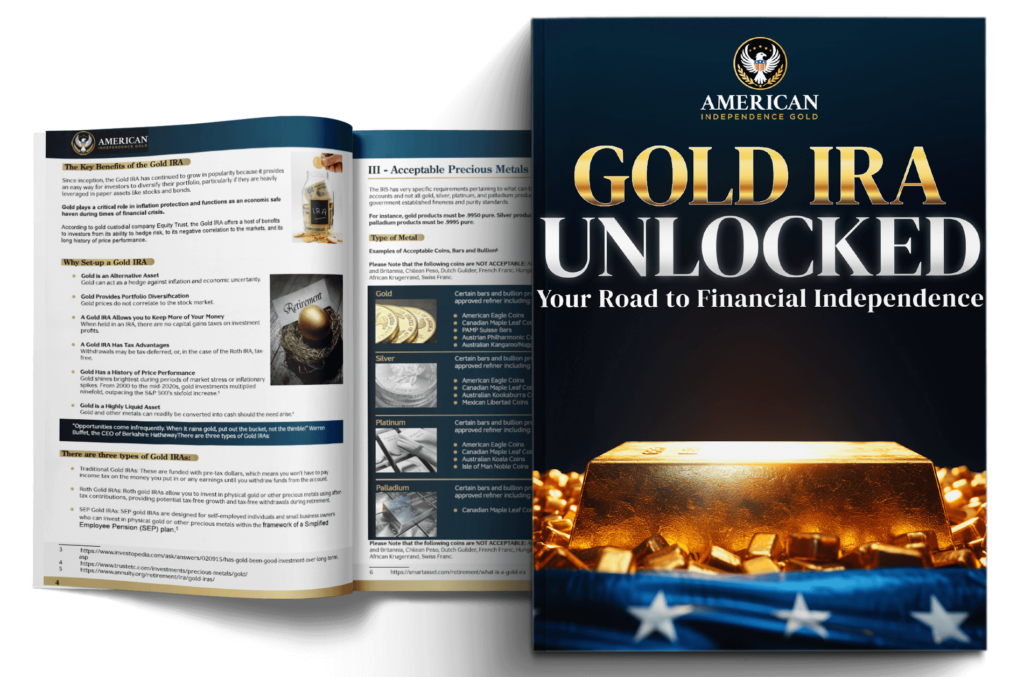
A Gold IRA is one of the most practical ways to add precious metals to your retirement savings without giving up the tax advantages of a traditional IRA or 401k. It works just like a regular IRA, except instead of holding stocks or mutual funds, it holds IRS-approved physical gold and silver. The metals are stored in a secure, insured depository on your behalf.
If you already have a traditional IRA or 401k, you may be able to move some or all of it into a Precious Metals IRA without paying taxes or penalties. The process is called a rollover, and it’s more straightforward than most people expect. You can learn more about how it works by reading our guide on rolling a 401k into a Gold IRA.
Frequently Asked Questions
Why do rising Treasury yields make gold more attractive?
Rising Treasury yields often signal concern about inflation, growing government debt, or dollar instability. When investors lose confidence in the purchasing power of paper assets, gold tends to benefit because it holds value independent of any government’s fiscal decisions. Gold has historically served as a hedge against the kind of financial pressure that rising yields often represent.
What is a Gold IRA and how is it different from a regular IRA?
A Gold IRA is a self-directed individual retirement account that holds IRS-approved physical precious metals, like gold coins or bars, instead of stocks or mutual funds. It carries the same tax advantages as a traditional IRA but gives you exposure to hard assets. The metals are stored in an insured depository, not at home, which keeps the account compliant with IRS rules.
Can I move my existing 401k into a Precious Metals IRA?
Yes. If you have a 401k from a current or former employer, you can typically roll it over into a Gold IRA without triggering taxes or early-withdrawal penalties. The process involves opening a self-directed IRA, selecting a custodian, and directing the funds to purchase IRS-approved metals. American Independence Gold can walk you through every step of that process.
Why are banks suddenly bullish on silver reaching triple digits?
Several major financial institutions have raised their silver price forecasts based on a combination of rising industrial demand, tight supply, and growing investor interest in precious metals as a safe haven. Silver is used heavily in solar panels, EV components, and electronics, and that demand is growing faster than mining output can keep up with. When financial uncertainty rises on top of that, prices can move sharply.
How does Japan’s bond market affect U.S. retirement accounts?
Japan holds a large portion of U.S. Treasury bonds. When Japanese yields rise, Japanese investors may sell U.S. Treasuries to invest at home, pushing U.S. yields higher. Higher U.S. yields increase borrowing costs, slow economic growth, and put pressure on stock valuations. That sequence of events can hurt traditional retirement portfolios and is one reason why diversifying into gold makes sense right now.
The signals coming from global bond markets right now are not the kind you want to ignore if you’re within 10 to 20 years of retirement. Rising yields, swelling debt, and a shifting Japan are all pointing toward continued financial volatility. A Gold IRA through American Independence Gold gives you a way to hold real assets inside your retirement account, assets that have held value through every major financial crisis in modern history. To get started or ask questions, contact us online or call us directly at (844) 714-4653. Our team is ready to help you understand your options and take the next step with confidence.