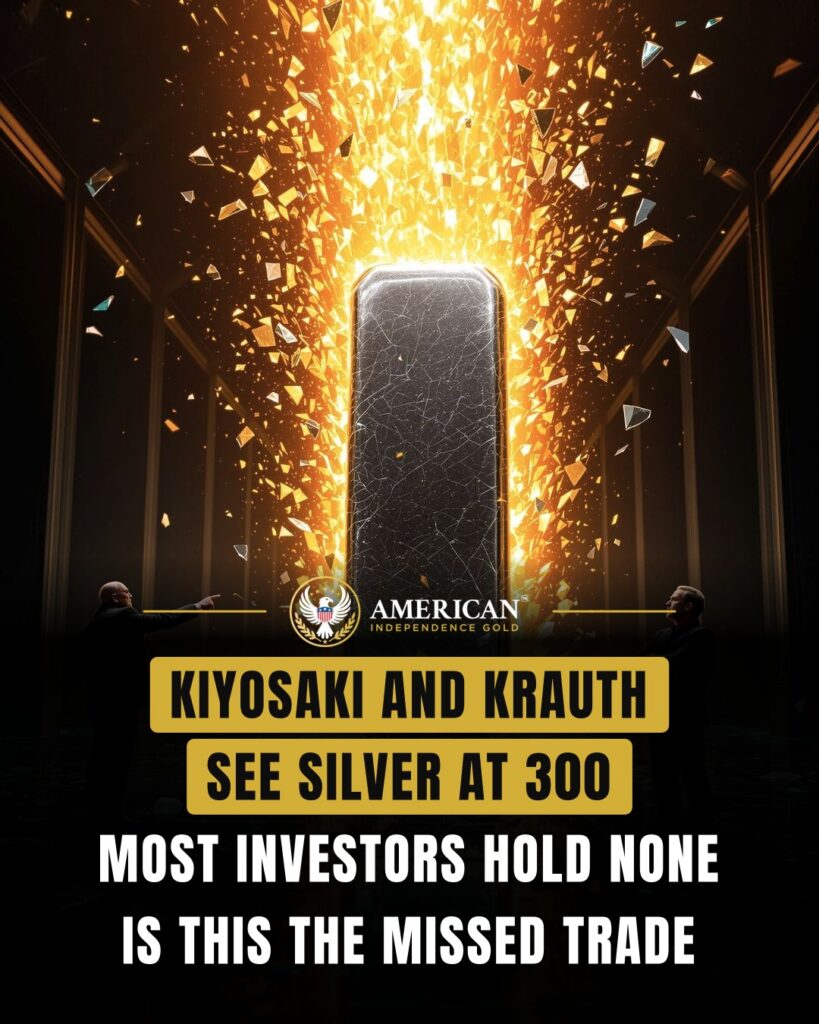
Most investors don’t own a single ounce of silver. That’s not an exaggeration. Surveys consistently show that the overwhelming majority of American retirement savers have zero exposure to precious metals, let alone silver specifically. So when two well-known voices in the investing world start talking about silver hitting $300 per ounce, it’s worth paying attention, even if you’re skeptical.
Robert Kiyosaki, the author of Rich Dad Poor Dad, and Peter Krauth, a precious metals analyst and author of The Great Silver Bull, have both made bold predictions about where silver is headed. Their reasoning isn’t based on hype. It’s grounded in supply and demand fundamentals, monetary policy concerns, and what they see as a serious mispricing in the market right now.
The Case for Silver at $300
To understand why these experts are bullish on silver, you first need to understand where silver stands today relative to its history. Silver has long traded at a fraction of gold’s price, and that gap, known as the gold-to-silver ratio, has historically hovered around 15 to 1. That means it used to take about 15 ounces of silver to buy one ounce of gold. Today, that ratio sits somewhere between 80 and 100 to 1. That’s a massive gap, and it suggests that silver is either deeply undervalued or that something has fundamentally changed in the market.
Kiyosaki has pointed to currency devaluation as a central driver of his silver thesis. His argument is straightforward: as governments print more money and national debt keeps climbing, paper currency loses purchasing power. Hard assets like silver and gold tend to hold their value over time because they can’t be printed out of thin air. For him, owning silver isn’t just a trade, it’s a form of financial protection.
Peter Krauth’s Industrial Demand Argument
Krauth takes a slightly different angle, though his conclusion is similar. He focuses heavily on industrial demand for silver, which has been growing at a remarkable pace. Silver is a key component in solar panels, electric vehicles, semiconductors, and medical devices. Unlike gold, which is mostly held as jewelry or in vaults, a significant portion of silver gets consumed in manufacturing and can’t easily be recycled. That consumption is only expected to increase as the global economy pushes further into clean energy and advanced technology. Krauth believes this structural demand shift, combined with limited new mining supply, creates the conditions for a major price move upward.
Why Most Investors Are Missing This
Here’s where things get interesting. Despite all the reasons to consider silver, most investors still don’t own any. Part of this is familiarity. People know stocks, bonds, and mutual funds because that’s what their 401(k) options include. Precious metals feel foreign, complicated, or risky by comparison. But the irony is that silver and gold have been stores of value for thousands of years, long before the stock market existed.
Another reason investors overlook silver is that it doesn’t pay dividends or interest. In a world where financial media focuses heavily on yield, an asset that simply holds value doesn’t get much airtime. But in an environment where inflation erodes the real return on bonds and savings accounts, that narrative is starting to shift.
If you want to keep tabs on where silver is trading right now, you can check the live silver price on our chart page. Watching price movements over time can help you understand the market before making any decisions.
The Currency Devaluation Factor
Both Kiyosaki and Krauth point to the same underlying concern: the U.S. dollar is losing purchasing power. The national debt has surpassed $34 trillion, and the Federal Reserve has spent years keeping interest rates artificially low to stimulate the economy. When you combine that with ongoing deficit spending, the long-term outlook for paper currency raises real questions. Silver, like gold, offers a way to hold wealth outside of the traditional banking system. That’s not a fringe idea anymore. It’s a mainstream concern that’s driving more investors toward precious metals every year.
How Silver Fits Into a Gold IRA Strategy
One thing that surprises many people is that silver can actually be held inside a retirement account. A Precious Metals IRA, sometimes called a Gold IRA, allows investors to hold IRS-approved physical metals inside a tax-advantaged account. That includes certain silver coins and bars that meet purity requirements. If you’re already familiar with how a Gold IRA works, adding silver to that strategy is a natural extension.
The tax benefits are the same as a traditional IRA. Contributions can reduce your taxable income, and the metals grow tax-deferred until you take distributions in retirement. For investors who are worried about inflation or currency risk, this structure lets you hold real, physical assets while still enjoying the tax advantages of a retirement account.
If you have an existing retirement account, like a 401(k) or traditional IRA, you may be able to move some of those funds into a Precious Metals IRA without paying taxes or penalties. You can learn more about moving an existing IRA into precious metals to see if it makes sense for your situation.
Is Silver Right for Every Investor?
Probably not, and it’s important to be honest about that. Silver is more volatile than gold. Its price can swing sharply in both directions, and the $300 predictions from Kiyosaki and Krauth are long-term theses, not guaranteed short-term outcomes. Anyone telling you a specific price target is certain is selling something.
That said, many financial advisors suggest that a 5% to 15% allocation to precious metals can provide meaningful diversification in a retirement portfolio. Silver, given its lower price per ounce compared to gold, can be an accessible entry point for investors who want exposure to the metals market without committing large sums upfront. If you’re curious about how physical silver fits alongside gold in a broader strategy, you can browse our silver coins and bars to see what’s available.
Frequently Asked Questions About Silver Investing
Why do experts like Kiyosaki think silver could reach $300?
Robert Kiyosaki and Peter Krauth point to a combination of factors: the historical gold-to-silver ratio being far above its long-term average, growing industrial demand from solar and EV sectors, limited new mining supply, and ongoing currency devaluation. They argue these forces together make silver significantly undervalued at current prices, though no price target is guaranteed.
Can I hold silver in a retirement account?
Yes. A Precious Metals IRA allows you to hold IRS-approved silver coins and bars inside a tax-advantaged retirement account. The silver must meet specific purity standards set by the IRS. This lets you benefit from silver’s potential price appreciation while keeping the tax advantages of a traditional or Roth IRA structure.
What is the gold-to-silver ratio and why does it matter?
The gold-to-silver ratio tells you how many ounces of silver it takes to buy one ounce of gold. Historically, this ratio averaged around 15 to 1. Today it sits between 80 and 100 to 1, which many analysts interpret as silver being significantly undervalued relative to gold. A return toward historical norms would imply a major price increase for silver.
What are the risks of investing in silver?
Silver is more volatile than gold and can experience sharp price swings in short periods. It doesn’t pay dividends or interest, and short-term price predictions are unreliable. Most financial advisors recommend treating silver as a long-term portfolio diversifier rather than a short-term trade, and suggest limiting precious metals to a modest percentage of total retirement savings.
How do I get started with a Precious Metals IRA that includes silver?
You start by working with a qualified precious metals IRA provider who can help you open a self-directed IRA, choose an IRS-approved custodian, and select eligible silver products. If you have an existing 401(k) or traditional IRA, you may be able to roll those funds over without tax penalties. Speaking with a specialist is the best first step to understand your options.
If you’re ready to take a closer look at silver and how it might fit into your retirement strategy, our team at American Independence Gold is here to help. Contact us today or call us directly at (844) 714-4653 to speak with a specialist who can walk you through your options with no pressure and no obligation.