
The United States national debt just crossed $39 trillion. That number is so large it’s almost impossible to picture. To put it in perspective, if you stacked $39 trillion in one-dollar bills, the pile would reach the moon and back multiple times. But beyond the jaw-dropping figure, the real question investors are asking is this: what does runaway government debt actually mean for your savings, your retirement, and the value of your money?
Some economists are drawing uncomfortable comparisons to Greece, a country that spiraled into a devastating financial crisis after years of heavy borrowing. Greece’s story is a cautionary tale about what happens when a government spends far more than it earns for too long. And while the US economy is much larger, the pattern of behavior looks familiar to anyone who’s been paying attention.
How Greece’s Debt Crisis Unfolded
To understand why people are comparing the US to Greece, it helps to know what actually happened there. In the years leading up to 2010, Greece was borrowing heavily to fund government programs, pensions, and public services. The problem was that the country’s tax revenues couldn’t keep up with the spending. When the global financial crisis hit in 2008, Greece’s situation became critical almost overnight.
Bond markets, which are basically the investors who lend money to governments, started demanding much higher interest rates to keep lending to Greece. That made the debt even more expensive to carry. Eventually, Greece needed a massive international bailout just to avoid defaulting on its loans. The price of that bailout was brutal spending cuts, tax hikes, and years of economic pain for ordinary Greek citizens. Unemployment shot up above 25 percent. Pensions were slashed. People lined up at ATMs with withdrawal limits because banks were on the verge of collapse.
The Debt Spiral Explained Simply
A debt spiral happens when a country borrows money, pays interest on that debt, and then has to borrow even more to cover those interest payments. It’s a cycle that feeds itself. Greece fell into this trap, and critics argue the US is showing early warning signs of the same pattern. The US currently spends more on interest payments for its national debt than it does on defense or Medicare, according to recent budget projections. That’s a significant shift from just a few years ago, and it’s the kind of structural problem that doesn’t fix itself easily.
Why the US Situation Is Both Different and Concerning
Here’s where things get nuanced. The US is not Greece, and it’s important to be honest about that. America issues debt in its own currency, the US dollar, which is also the world’s reserve currency. That gives the US a level of financial flexibility that Greece never had. Greece was locked into the Euro and couldn’t print its way out of trouble. The US technically can, though doing so carries its own serious risks.
The concern isn’t that the US will collapse tomorrow. The concern is the long-term trajectory. When a government consistently spends more than it takes in, it has two main options: borrow more or inflate the currency. Both options erode the purchasing power of the dollar over time. That means the money sitting in your savings account or your traditional retirement fund buys less and less as the years go by. For retirees and people planning for retirement, that’s not a theoretical problem. It’s a very real one.
What Happens to the Dollar When Debt Grows
When debt levels rise and confidence in a government’s finances weakens, currency values tend to fall. A weaker dollar means imported goods cost more, inflation stays elevated, and the real value of fixed-income savings shrinks. We’ve already seen elevated inflation in recent years, and many analysts connect that directly to the massive government spending that followed the pandemic. The dollar has lost significant purchasing power over the past decade, and the debt situation suggests that trend isn’t reversing anytime soon.
Gold’s Historical Role When Governments Struggle
This is where gold enters the picture, and it’s not a new idea. Gold has been used as a store of value for thousands of years precisely because it can’t be printed, inflated away, or defaulted on. When paper currencies lose value, gold tends to hold its ground or even rise. During Greece’s crisis, gold prices climbed. During the 2008 financial crisis, gold climbed. During periods of high inflation in the 1970s, gold climbed dramatically.
That pattern isn’t a coincidence. Gold responds to the same forces that weaken government finances: inflation, currency devaluation, and loss of confidence in financial institutions. For investors looking to protect their retirement savings from those exact risks, a Gold IRA is one of the most direct tools available. A Gold IRA lets you hold physical gold inside a tax-advantaged retirement account, giving you the protection of precious metals without giving up the tax benefits of traditional retirement savings.
If you already have a traditional IRA or 401(k), you don’t have to start from scratch. You can do an IRA to Gold IRA transfer and move existing retirement funds into physical precious metals without triggering taxes or penalties, as long as the process is handled correctly. It’s worth understanding the steps involved before making any moves.
What a Precious Metals IRA Actually Does for Your Portfolio
A Precious Metals IRA works similarly to a traditional IRA, but instead of holding stocks, bonds, or mutual funds, it holds IRS-approved physical metals like gold, silver, platinum, and palladium. The metals are stored in a secure, insured depository on your behalf. You still get the tax advantages of the IRA structure, but you’re holding an asset that historically holds value when paper assets struggle.
This isn’t about betting everything on gold or abandoning conventional investments entirely. Most financial professionals who recommend gold suggest it as a portion of a diversified portfolio, typically somewhere between 10 and 20 percent depending on your risk tolerance and timeline. The goal is balance. You want some exposure to growth assets, but you also want a portion of your savings in something that doesn’t move in lockstep with the stock market or the health of the US dollar.
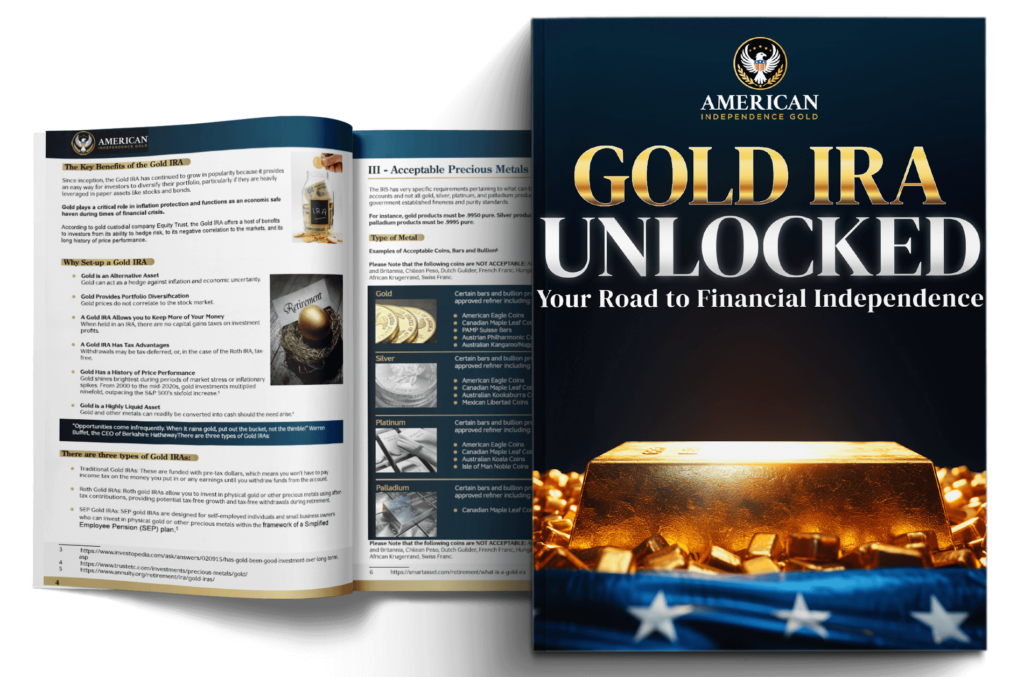
Want to dig deeper into how this works before making any decisions? You can download our free Gold IRA guide to get a clear, no-pressure breakdown of the process, the rules, and the benefits.
Frequently Asked Questions
Is the US actually at risk of a debt crisis like Greece?
The US has key advantages Greece didn’t have, including control of its own currency and reserve currency status. But rising debt, growing interest payments, and persistent deficits do create real long-term risks to dollar purchasing power and financial stability. Most economists agree the current trajectory is unsustainable without serious fiscal reform.
How does rising national debt affect gold prices?
When government debt grows, it often leads to currency devaluation and inflation, both of which historically push gold prices higher. Gold is a finite physical asset that can’t be printed or diluted, so investors tend to move toward it when confidence in paper currency weakens. This pattern has repeated across multiple debt crises over the past century.
What is a Gold IRA and how is it different from a regular IRA?
A Gold IRA is a self-directed individual retirement account that holds IRS-approved physical precious metals instead of paper assets like stocks or bonds. It offers the same tax advantages as a traditional or Roth IRA, but the underlying asset is physical gold or other approved metals stored in a secure depository. It’s designed for investors who want inflation protection inside their retirement savings.
Can I move my existing 401(k) or IRA into a Gold IRA without penalties?
Yes, in most cases you can roll over a 401(k) or transfer an existing IRA into a Gold IRA without paying taxes or early withdrawal penalties, as long as the funds move directly from one custodian to another following IRS guidelines. The process is called a rollover or direct transfer, and a qualified Gold IRA specialist can walk you through it step by step.
How much of my retirement savings should I put into gold?
Most financial advisors suggest allocating between 10 and 20 percent of a retirement portfolio to precious metals, though the right amount depends on your age, risk tolerance, and overall financial goals. Gold is generally viewed as a hedge and a stabilizer rather than a primary growth asset. Speaking with a specialist can help you figure out the right allocation for your specific situation.
The $39 trillion number isn’t just a headline. It’s a signal worth taking seriously, especially if you’re within 10 to 20 years of retirement. The good news is that tools like a Gold IRA exist specifically for situations like this. Physical precious metals have protected savings through currency crises, inflation spikes, and government debt problems for generations. If you’re ready to learn more about whether a Precious Metals IRA makes sense for your situation, contact us at American Independence Gold or call us directly at (844) 714-4653. Our team is here to answer your questions with no pressure and no obligation.