
Something important is happening in the US economy right now, and most people aren’t paying close enough attention to it. The money supply, which is basically the total amount of money circulating through the economy, has dropped sharply in recent months. That kind of decline doesn’t happen very often. And when it does, history shows it usually means trouble is coming. If you have savings, a retirement account, or any kind of investment portfolio, this is worth understanding.
What Is the Money Supply and Why Does It Matter?
Think of the money supply as the fuel that keeps the economy running. When there’s plenty of it, businesses borrow, consumers spend, and the economy grows. When it shrinks, the opposite tends to happen. Spending slows down, businesses pull back, and economic activity contracts. Economists track a measure called M2, which counts cash, checking accounts, savings accounts, and other easily accessible money. When M2 falls significantly, it’s one of the clearest warning signs that a slowdown, or even a recession, could be on the way.
What makes the current situation unusual is the speed and size of the drop. After years of massive money creation following the 2008 financial crisis and then again during the COVID pandemic, the supply of money has reversed course. That kind of sharp reversal, going from rapid expansion to rapid contraction, has historically been followed by economic pain. It happened before the Great Depression. It happened before several recessions in the 20th century. And now it’s happening again.
How a Shrinking Money Supply Affects Everyday People
When the money supply tightens, the effects work their way through the economy gradually. Credit becomes harder to get. Interest rates stay elevated. Businesses that relied on cheap borrowing start to struggle. Layoffs can follow. And for regular people with savings in traditional accounts or retirement funds, the risk is that the value of those savings can erode quickly if economic conditions worsen. Paper money, stocks, and bonds can all lose value during a bust. That’s why financial experts often talk about the importance of holding assets that don’t depend on the health of the dollar or the stock market.
Why Economic Busts Are Especially Dangerous for Retirement Savings
If you’re still years away from retirement, a market downturn is painful but recoverable. You have time on your side. But if you’re in your 50s or 60s and getting closer to needing that money, a serious economic bust can be devastating. Losing 30 or 40 percent of a retirement portfolio right before you plan to retire isn’t just a number on a screen. It means working longer, spending less, or both. And with inflation still running above historical averages, the purchasing power of whatever you do have saved keeps shrinking year after year.
This is exactly the kind of environment where diversification matters most. Not just spreading money across different stocks, but actually moving some of it into assets that behave differently when the economy struggles. Precious metals, and gold in particular, have a long track record of holding their value when other assets fall apart. That’s not a sales pitch. It’s a pattern that goes back centuries.
Gold as a Defensive Asset in Uncertain Times
Gold doesn’t pay dividends and it doesn’t grow like a tech stock during a bull market. But that’s not the point. The point is that gold holds purchasing power over time. When the dollar weakens, gold tends to rise. When stock markets crash, investors often move money into gold, pushing its price up. When inflation erodes the value of cash, gold acts as a store of value that protects what you’ve worked to save. For people who want to understand the basics before making any decisions, our gold investing basics page is a good starting point.
You can also check the current gold price at any time to see how it’s moving in real time. Watching how gold performs during periods of economic uncertainty can help you understand why so many financial advisors recommend it as part of a balanced retirement strategy.
What a Gold IRA Is and How It Can Help
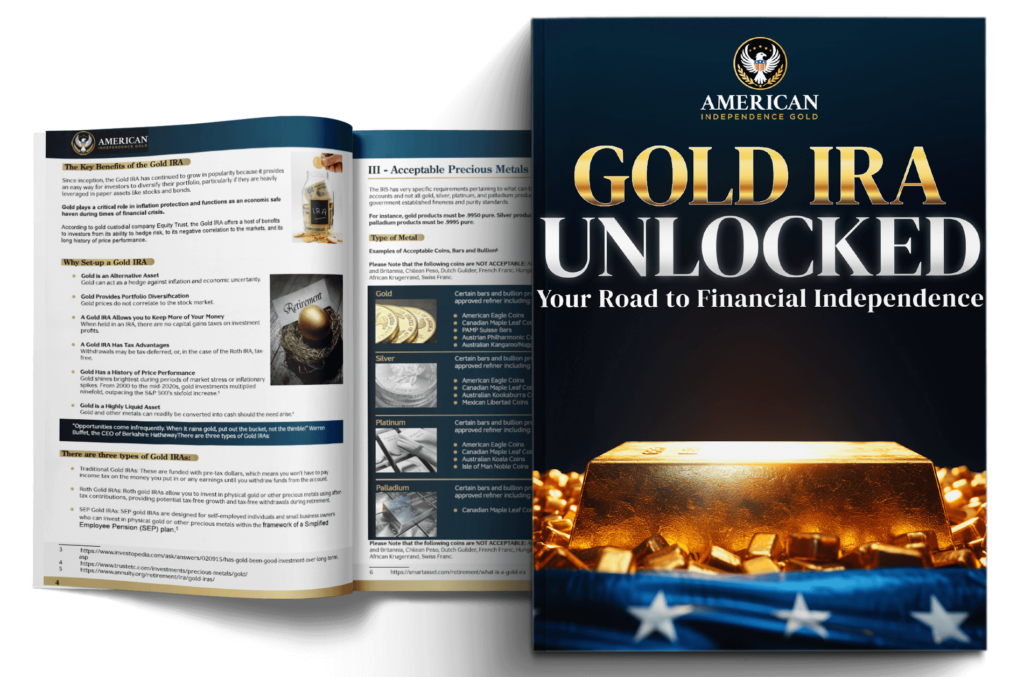
A Gold IRA is a retirement account that holds physical precious metals instead of, or in addition to, traditional paper assets like stocks and bonds. It works very similarly to a regular IRA in terms of tax treatment. You get the same tax advantages, the same contribution rules, and the same IRS oversight. The key difference is what’s inside the account. Instead of mutual funds or ETFs, a Gold IRA holds actual physical gold (and sometimes silver, platinum, or palladium) stored in an approved depository.
For people who already have a 401(k) through an employer, or a traditional or Roth IRA, moving some of those funds into a Gold IRA is often easier than people expect. You can learn exactly how a Gold IRA works before making any decisions. There’s no pressure to act immediately. The important thing is to understand your options while there’s still time to make thoughtful choices.
Rolling Over an Existing Retirement Account
One of the most common questions people have is whether they can move money from their current retirement accounts without paying taxes or penalties. The answer is yes, in most cases. A rollover done correctly allows you to transfer funds from a 401(k) or traditional IRA directly into a Gold IRA without triggering a taxable event. The process is straightforward when you work with a company that knows what they’re doing, and it doesn’t require you to liquidate your current investments all at once. You can start with a portion of your savings and see how it fits into your overall plan.
Frequently Asked Questions
What happens to gold prices when the money supply shrinks?
When the money supply contracts, economic uncertainty tends to increase, which often drives investors toward safe-haven assets like gold. Historically, gold prices have risen during periods of financial stress and dollar weakness. While no asset is guaranteed to move in any specific direction, gold has consistently served as a store of value when confidence in paper money declines.
How is a Gold IRA different from buying gold coins or bars directly?
A Gold IRA holds physical precious metals inside a tax-advantaged retirement account, meaning your gains are either tax-deferred or tax-free depending on the account type. Buying gold coins or bars directly gives you physical possession but without the retirement tax benefits. A Gold IRA is specifically designed to protect retirement savings, while direct purchases are more suited for general wealth storage outside of retirement accounts.
Can I move my existing 401(k) into a Gold IRA without paying penalties?
Yes. A properly executed rollover from a 401(k) into a Gold IRA is not a taxable event and does not trigger early withdrawal penalties. The key is working with a qualified custodian who handles the transfer directly between accounts. American Independence Gold can walk you through the process step by step to make sure it’s done correctly and in compliance with IRS rules.
How much of my retirement savings should I put into gold?
Most financial advisors suggest allocating somewhere between 10 and 20 percent of a retirement portfolio to precious metals as a diversification strategy. The right amount depends on your age, risk tolerance, and how close you are to retirement. Speaking with a specialist at American Independence Gold can help you figure out an allocation that makes sense for your specific situation without overcommitting to any single asset class.
Is a Precious Metals IRA the same as a Gold IRA?
A Precious Metals IRA is a broader term that includes gold, silver, platinum, and palladium held inside a retirement account. A Gold IRA typically refers specifically to gold, though many accounts hold multiple metals. Both terms are often used interchangeably. The IRS has specific rules about which metals qualify, including purity requirements, so it’s important to work with a company that understands those regulations.
The warning signs in the economy right now are real. A shrinking money supply, persistent inflation, and elevated interest rates are not a comfortable combination. The good news is that there are practical steps you can take to protect what you’ve saved. A Gold IRA or Precious Metals IRA isn’t a guarantee against every possible outcome, but it’s one of the most time-tested tools available for defending retirement savings when the economic outlook gets murky. If you’d like to talk through your options, contact us at American Independence Gold or call us directly at (844) 714-4653. Our team is here to help you think through the right approach for your situation.