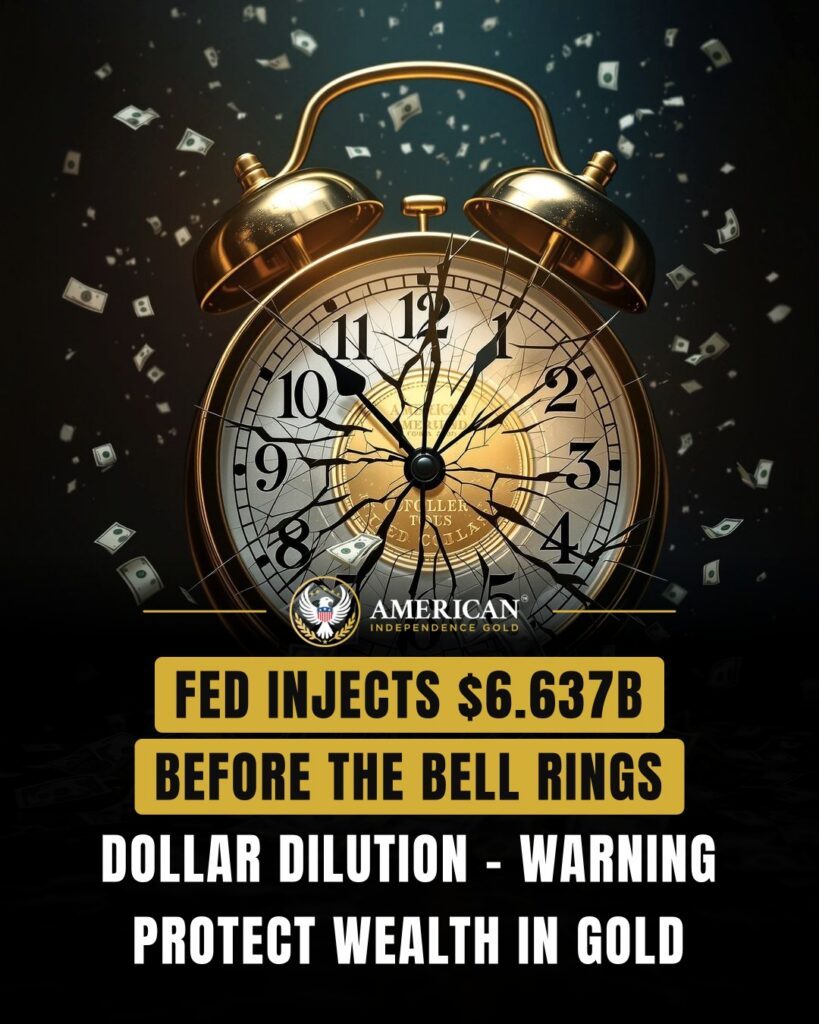
The Federal Reserve moved quietly this morning, injecting $6.637 billion into the U.S. economy before most Americans had finished their first cup of coffee. That’s not a typo. Billions of dollars flowing into financial markets before the opening bell is the kind of thing that gets traders talking, but it should also get everyday retirement savers paying attention. When the Fed adds this much liquidity to the system, the ripple effects don’t stay on Wall Street. They reach your savings account, your retirement portfolio, and yes, the price of gold.
This article breaks down what the Fed’s latest move actually means, why dollar dilution is a real concern, and how a Gold IRA can serve as a practical tool to protect what you’ve worked hard to build.
What Does “Injecting Liquidity” Actually Mean?
When the Federal Reserve “injects” money into the economy, it’s essentially adding cash to the financial system. The most common way they do this is through open market operations, where the Fed buys government securities from banks. The banks then have more cash on hand, which they can lend out or invest. In theory, this keeps credit flowing and markets running smoothly. In practice, it also means more dollars are circulating in the system than there were before.
Think of it like this: if there are 10 slices of pizza and 10 people, everyone gets one slice. But if you suddenly add 5 more slices without adding more people, each slice becomes slightly less valuable. Money works the same way. When more dollars enter the system, each existing dollar tends to buy a little less. Economists call this inflation, and most people feel it at the grocery store, the gas pump, and eventually in their retirement accounts.
Why $6.637 Billion Is Worth Noticing
This isn’t a random number. The Fed’s liquidity operations are carefully timed and sized, and a single-day injection of this scale signals that policymakers are actively working to keep markets stable. That might sound reassuring, but it also means the money supply is expanding. Historically, large liquidity events have been followed by increased volatility in stocks and bonds, and a corresponding rise in demand for hard assets like gold and silver. Traders watching the morning numbers know this pattern well, which is exactly why gold tends to react quickly when the Fed moves.
Dollar Dilution and Why It Matters to Retirement Savers
The term “dollar dilution” gets thrown around a lot, but what does it really mean for someone with a 401(k) or traditional IRA? Simply put, if the dollar loses purchasing power over time, your savings have to work harder just to stay in place. A retirement account that holds $500,000 today might feel like plenty, but if inflation runs at 4-5% per year for a decade, that money’s real buying power could shrink significantly. This is one of the core reasons financial planners often recommend holding some portion of a retirement portfolio in assets that don’t move in lockstep with the dollar.
Gold has historically served that role. It’s not tied to any one government’s monetary policy, it can’t be printed, and its supply grows slowly compared to paper currency. When the Fed adds billions to the system, gold doesn’t get diluted the same way dollars do. That’s a key distinction, and it’s one that more retirement savers are starting to take seriously. You can check the live gold price to see how gold has been responding to recent Fed activity in real time.
Stocks and Bonds Aren’t Enough on Their Own
For decades, the standard retirement advice was to hold a mix of stocks and bonds. That model worked reasonably well when inflation was low and interest rates were stable. But in an environment where the Fed is regularly injecting large sums of liquidity, bonds lose their appeal quickly. Rising inflation erodes the fixed returns bonds offer, and stocks can swing wildly when liquidity conditions change. Holding only paper assets during periods of dollar dilution leaves retirement savers exposed in ways they may not fully realize until it’s too late.
How a Gold IRA Works as a Real Hedge
A Gold IRA is a self-directed individual retirement account that holds physical gold (and other IRS-approved precious metals) instead of, or alongside, traditional paper investments. It functions like a standard IRA in terms of tax treatment, but instead of holding stocks or mutual funds, it holds real, tangible gold stored in an approved depository. This structure gives retirement savers the tax advantages of an IRA while also providing exposure to an asset that tends to hold its value when currencies weaken.
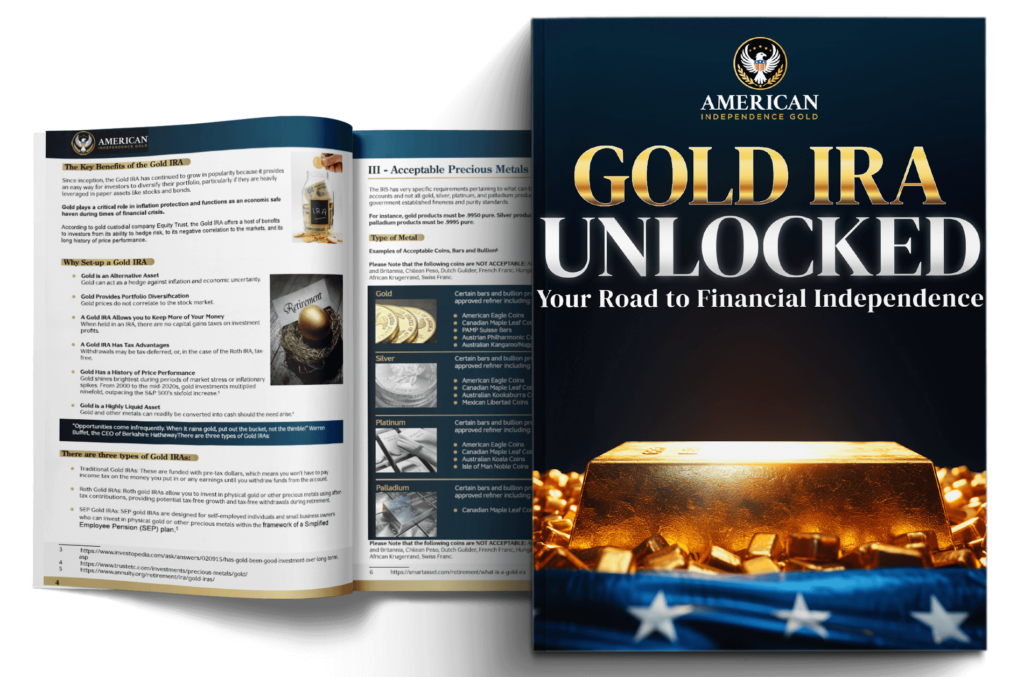
If you’re new to this concept, the Gold IRA basics page at American Independence Gold is a good starting point. It walks through who qualifies, how the account works, and what kinds of metals are allowed under IRS rules. It’s written in plain language and covers the most common questions people have before they get started.
Rolling Over an Existing Retirement Account
One of the most common ways people open a Gold IRA is by rolling over an existing 401(k) or traditional IRA. This process can be done without triggering taxes or early withdrawal penalties, as long as it’s handled correctly. A direct rollover moves funds straight from your old account to your new Gold IRA without you ever touching the money. American Independence Gold specializes in helping clients complete this process smoothly. If you have an old employer plan you haven’t thought about in years, a 401k to Gold IRA rollover could be a practical way to put those funds to work in a more inflation-resistant asset.
What History Shows Us About Gold and Fed Policy
This isn’t the first time the Fed has injected large amounts of liquidity into the economy, and gold’s track record during these periods is worth understanding. During the years following the 2008 financial crisis, the Fed ran several rounds of quantitative easing, which is essentially large-scale liquidity injection. Over that same period, gold prices climbed significantly as investors sought protection from dollar weakness. More recently, the massive monetary expansion during 2020 and 2021 was followed by gold reaching all-time highs and inflation hitting levels not seen in 40 years.
None of this guarantees gold will always go up when the Fed acts. Markets are complicated. But the pattern is consistent enough that ignoring it entirely seems unwise, especially for someone trying to protect a retirement portfolio over a 10 to 20 year horizon. Staying informed matters, and following gold market news regularly can help you spot trends before they fully develop.
Frequently Asked Questions
What happens to gold when the Federal Reserve injects money into the economy?
When the Fed injects liquidity, it typically increases the money supply, which can weaken the dollar’s purchasing power over time. Gold tends to benefit during these periods because it holds intrinsic value independent of any currency. Historically, large Fed liquidity events have been followed by increased investor demand for gold as a store of value and inflation hedge.
How does a Gold IRA protect against dollar dilution?
A Gold IRA holds physical gold, which cannot be printed or artificially expanded the way paper currency can. When the dollar loses purchasing power due to monetary expansion, gold’s value tends to rise or hold steady in relative terms. This makes a Gold IRA a practical tool for preserving retirement savings against the long-term effects of inflation and currency debasement.
Can I move my existing 401(k) into a Gold IRA without paying taxes?
Yes, in most cases. A direct rollover from a 401(k) to a Gold IRA can be completed without triggering income taxes or early withdrawal penalties. The key is using a direct transfer so the funds move from one custodian to another without passing through your hands. American Independence Gold can walk you through the process and help ensure it’s done correctly under IRS guidelines.
What types of gold are allowed in a Gold IRA?
The IRS has specific requirements for metals held in a Gold IRA. Gold must be at least 99.5% pure and come in approved forms, such as American Gold Eagles, Canadian Gold Maple Leafs, and certain gold bars from accredited refiners. Collectible coins and jewelry do not qualify. A reputable Gold IRA provider will guide you toward IRS-compliant products.
Is now a good time to open a Gold IRA given current Fed activity?
Many financial professionals argue that the best time to add inflation protection to a retirement portfolio is before inflation fully takes hold, not after. With the Fed actively managing liquidity and the dollar facing ongoing pressure, waiting for a “perfect” moment may mean missing a window. The right time depends on your personal financial situation, but current conditions make the case for diversification into precious metals worth considering seriously.
The Fed’s $6.637 billion injection is a reminder that monetary policy decisions made in Washington affect every retirement account in the country. Dollar dilution is a slow process, but it’s a real one, and waiting until the damage is obvious usually means acting too late. A Gold IRA through American Independence Gold is one of the most straightforward ways to add a layer of protection to your retirement savings without overhauling your entire financial plan.
If you’re ready to learn more or want to talk through your options with someone who understands both the market and the mechanics of precious metals retirement accounts, contact us today or call us directly at (844) 714-4653. There’s no pressure and no obligation, just a straightforward conversation about protecting what you’ve built.