
The Federal Reserve is sending mixed signals, home prices are breaking records, and everyday costs keep climbing. If you’ve been watching the news and feeling uneasy about your financial future, you’re not alone. A lot of Americans are asking the same question right now: is my retirement savings actually safe? The answer depends heavily on how you’re positioned — and whether your portfolio is built to handle the kind of economic pressure we’re seeing today.
The Fed Can’t Agree — and That’s a Problem for Your Wallet
Federal Reserve officials are openly divided on what inflation really means for the U.S. economy going forward. Some believe the worst is behind us and that price pressures are cooling down enough to justify rate cuts. Others aren’t so sure, pointing to stubborn cost increases in housing, services, and everyday goods as reasons to stay cautious. This internal disagreement at the Fed is more significant than it might seem on the surface.
When the country’s central bank can’t reach a clear consensus on the direction of inflation, it creates uncertainty in the markets. Investors don’t know what to expect from interest rate decisions. Businesses can’t plan as confidently. And regular Americans — especially those approaching retirement — are left wondering whether their savings will hold their value in the months and years ahead. Uncertainty at the Fed level tends to ripple outward in ways that affect everyone’s financial life.
What “Divided” Really Means for Interest Rates
When Fed officials disagree on inflation, it usually means interest rate decisions become harder to predict. Rate changes affect everything from mortgage payments to bond yields to the value of the U.S. dollar itself. A split Fed often signals that policy could shift quickly in either direction, which adds volatility to financial markets. For retirement savers, that kind of unpredictability is one of the biggest risks to a portfolio built mostly around stocks and bonds. Assets that move independently of Fed decisions — like physical gold — tend to become more attractive during these periods.
Home Prices at All-Time Highs — Good News or Warning Sign?
U.S. home prices have officially hit record levels. On the surface, that might sound like good news if you already own a home. But look a little deeper, and the picture gets more complicated. Record home prices are partly a reflection of how much the dollar has lost in purchasing power over the past few years. When prices for homes, groceries, gas, and services all rise together, it’s not just a sign of a booming economy — it can also be a sign that the currency itself is worth less than it used to be.
For people saving for retirement, this matters a lot. If the dollars sitting in your savings account or retirement fund are buying less over time, your actual wealth is shrinking even if the numbers on paper look the same. That’s what inflation does — it quietly erodes the real value of your money. And with home prices now at historic highs, the cost of living isn’t showing any signs of coming back down to where it was just a few years ago.
Housing Costs and the Dollar’s Quiet Decline
There’s a direct connection between rising home prices and pressure on the U.S. dollar. When the Fed keeps interest rates uncertain and inflation stays elevated, confidence in the dollar tends to weaken. A weaker dollar means your purchasing power decreases, and the things you need — housing, healthcare, food — cost more in dollar terms. This is exactly the kind of environment where holding some of your savings in a hard asset like gold has historically made a real difference. Gold tends to hold its value when the dollar weakens, which is why so many retirement savers are paying close attention to it right now.
Why Gold Makes Sense When Costs Keep Climbing
Gold has been used as a store of value for thousands of years, and the reason is simple: it doesn’t lose its purchasing power the way paper currency can. When inflation rises and the dollar weakens, gold typically moves in the opposite direction. It’s not a perfect hedge for every situation, but over long periods of time — especially during inflationary cycles — gold has consistently helped protect wealth. That’s not a sales pitch, that’s just history.
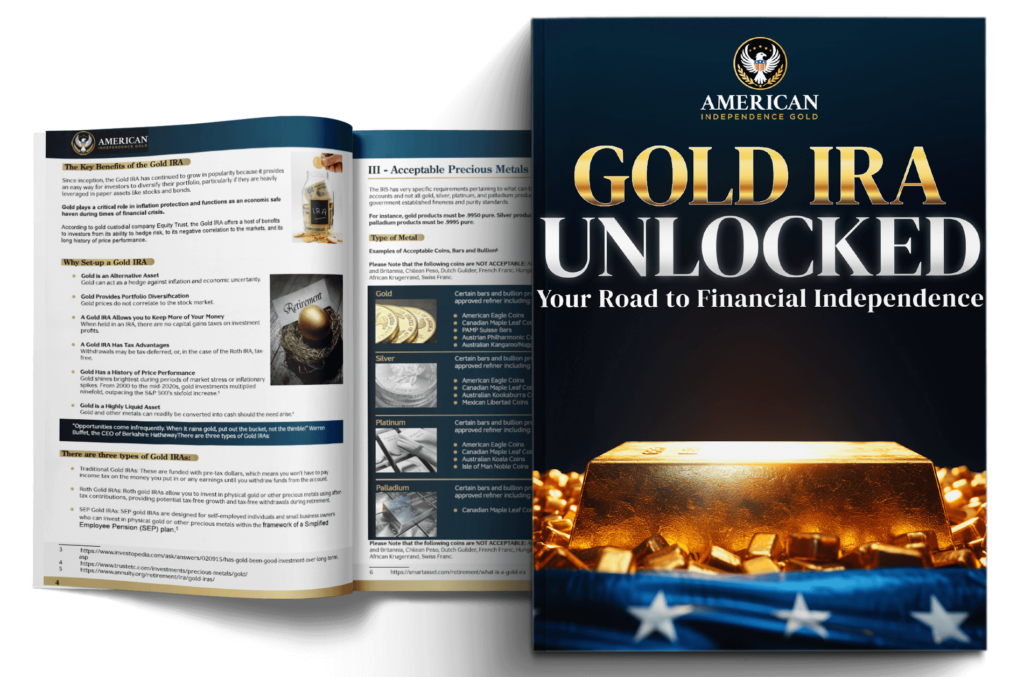
For retirement savers specifically, the good news is that you don’t have to choose between your existing retirement accounts and investing in gold. A Gold IRA lets you hold physical gold inside a tax-advantaged retirement account, following the same IRS rules as a traditional IRA. It’s a way to add real asset protection to your retirement strategy without giving up the tax benefits you’ve already built up. If you want to understand how this works in detail, you can read our full Gold IRA breakdown to get a clear picture of the process, the costs, and the benefits.
Rolling Over a 401k or IRA Into Gold
One of the most common questions people ask is whether they can move their existing retirement savings into gold without paying taxes or penalties. The short answer is yes — in most cases, you can. If you have a 401k from a current or former employer, or a traditional IRA, you may be eligible to do a 401k to Gold IRA rollover without triggering a taxable event. The process is more straightforward than most people expect, and it doesn’t require you to liquidate your entire retirement account — you can move a portion of it into a Gold IRA while keeping the rest in place.
Frequently Asked Questions
Why are Fed officials divided on inflation right now?
Fed officials are divided because the economic data is sending mixed signals. Some indicators suggest inflation is cooling, while others — like housing costs and services prices — remain stubbornly high. This disagreement reflects genuine uncertainty about whether price pressures are truly under control, which makes it harder for the Fed to commit to a clear path on interest rates. That uncertainty tends to create volatility in financial markets and puts pressure on the U.S. dollar’s purchasing power.
How do record home prices affect my retirement savings?
Record home prices are partly a reflection of reduced purchasing power in the U.S. dollar. When the cost of housing, food, and services all rise together, the real value of money sitting in savings accounts or retirement funds declines over time. If your retirement portfolio isn’t keeping pace with actual inflation, you may be losing ground even if your account balance looks stable. Diversifying into assets like gold can help offset this erosion of purchasing power.
What is a Gold IRA and how does it work?
A Gold IRA is a self-directed individual retirement account that holds physical gold — and sometimes other approved precious metals — instead of paper assets like stocks or bonds. It follows the same IRS rules as a traditional IRA, including the same contribution limits and tax treatment. You work with a custodian who specializes in self-directed IRAs, and your gold is stored in an IRS-approved depository. It’s a legal, regulated way to hold physical gold inside a retirement account.
Can I roll over my existing 401k into a Gold IRA without paying taxes?
In most cases, yes. A direct rollover from a 401k or traditional IRA into a Gold IRA is typically not a taxable event, as long as the funds move directly from one custodian to another without passing through your hands. This is called a direct rollover or trustee-to-trustee transfer. It’s important to follow the IRS rules carefully to avoid penalties, which is why working with a specialist who knows the process is strongly recommended.
Is gold a good investment during inflation?
Gold has historically performed well during periods of elevated inflation and dollar weakness. It’s not guaranteed to rise in every inflationary environment, but over longer time horizons, gold has maintained its purchasing power far better than paper currency. For retirement savers, gold is generally considered a protective asset rather than a growth asset — meaning its primary role is to preserve wealth rather than generate aggressive returns. That distinction matters when building a balanced retirement strategy.
The signals coming out of Washington right now — a divided Fed, record-high home prices, and persistent cost pressures — are exactly the kind of conditions that make a Precious Metals IRA worth a serious look. If you’ve been thinking about protecting your retirement savings with gold, now is a reasonable time to get the facts and make an informed decision. Reach out to the team at American Independence Gold to talk through your options — contact us online or call us directly at (844) 714-4653. There’s no pressure, just straight answers from people who know this space well.