Goldman Sachs just changed its mind about global oil supplies, and the timing matters. The investment bank recently reversed an earlier prediction, now warning that rising tensions in the Persian Gulf could seriously disrupt the flow of oil to markets around the world. That kind of shift from one of Wall Street’s biggest names doesn’t happen without reason, and it’s worth paying attention to what’s driving it and what it could mean for your money.
What Goldman Sachs Is Actually Warning About
Goldman Sachs had previously taken a more optimistic view on oil supply recovery. But geopolitical pressure in the Middle East has forced a reassessment. The bank now sees a real risk that production levels, which have already been struggling to get back to where they were before recent conflicts, could face another setback. Middle East output is still running below pre-war levels, and any new disruption could push that gap even wider.
The concern here isn’t just abstract. This is about real barrels of oil that the global economy depends on every single day. When supply tightens, prices go up. And when energy prices go up, everything else tends to follow, from groceries to airline tickets to the cost of heating your home. Goldman’s reversal is essentially a signal that the risk of that happening just got more serious.
The Hormuz Strait Factor
One of the most critical pieces of this puzzle is the Strait of Hormuz. This is a narrow waterway connecting the Persian Gulf to the rest of the world’s oceans, and roughly 20 percent of all global oil passes through it every day. Some estimates put that figure at close to 10 million barrels daily. If anything disrupts traffic through Hormuz, whether through military conflict, blockades, or political standoffs, the ripple effects on global energy markets would be immediate and severe. Goldman’s updated warning puts that vulnerability squarely back in focus.
Why Energy Shocks Hit Your Wallet Harder Than You Think
Most people feel energy price spikes at the gas pump first. But the impact doesn’t stop there. Oil is a core input for almost every industry. When oil prices spike, manufacturers pay more to produce goods, trucking companies pay more to move them, and retailers pass those costs along to you at checkout. It’s a chain reaction that tends to accelerate inflation across the board.
For people who are saving for retirement or already living on a fixed income, that kind of inflation is particularly damaging. The purchasing power of your savings erodes quietly over time. A dollar saved today buys less tomorrow if inflation is running hot. That’s not a hypothetical risk right now. It’s a very real one, and Goldman’s updated oil forecast makes it more pressing.
How Geopolitical Risk Feeds Into Inflation
Geopolitical events have a way of turning into economic events faster than most people expect. When tensions rise in a region that controls a large share of global oil supply, traders and investors start pricing in the risk of disruption before anything actually happens. That means oil prices can spike on the threat alone, not just on an actual supply cut. We’ve seen this pattern play out multiple times over the past few decades, and the current situation in the Persian Gulf fits that same mold. The uncertainty itself becomes a cost that filters through the economy.
Gold’s Track Record During Energy Market Disruptions
Here’s something worth knowing: gold and oil prices have historically moved in the same direction during periods of geopolitical stress. When oil prices spike due to conflict or supply disruption, inflation tends to follow, and gold has traditionally been one of the assets investors turn to as a store of value when paper money starts losing purchasing power. That relationship isn’t guaranteed, but it has held up across multiple major energy crises going back decades.
During the 1970s oil embargo, gold prices surged dramatically. During the Gulf War in the early 1990s, gold saw increased demand. After the 2003 Iraq invasion, gold began a multi-year bull run. The pattern is consistent enough that many financial advisors treat gold as a natural hedge against the kind of inflation that energy shocks tend to produce. You can check the live gold price to see how gold is responding to current market conditions in real time.
What Makes Gold Different From Other Assets Right Now
Stocks can fall sharply during geopolitical crises. Bonds can lose value when inflation picks up. Cash loses purchasing power directly. Gold, on the other hand, has no counterparty risk. It doesn’t depend on a company’s earnings or a government’s fiscal policy. It’s a physical asset with thousands of years of recognized value. That’s not a pitch, it’s just history. And in a moment when Goldman Sachs is warning about potential oil supply shocks, that history feels pretty relevant.
Protecting Your Retirement Savings With a Precious Metals IRA
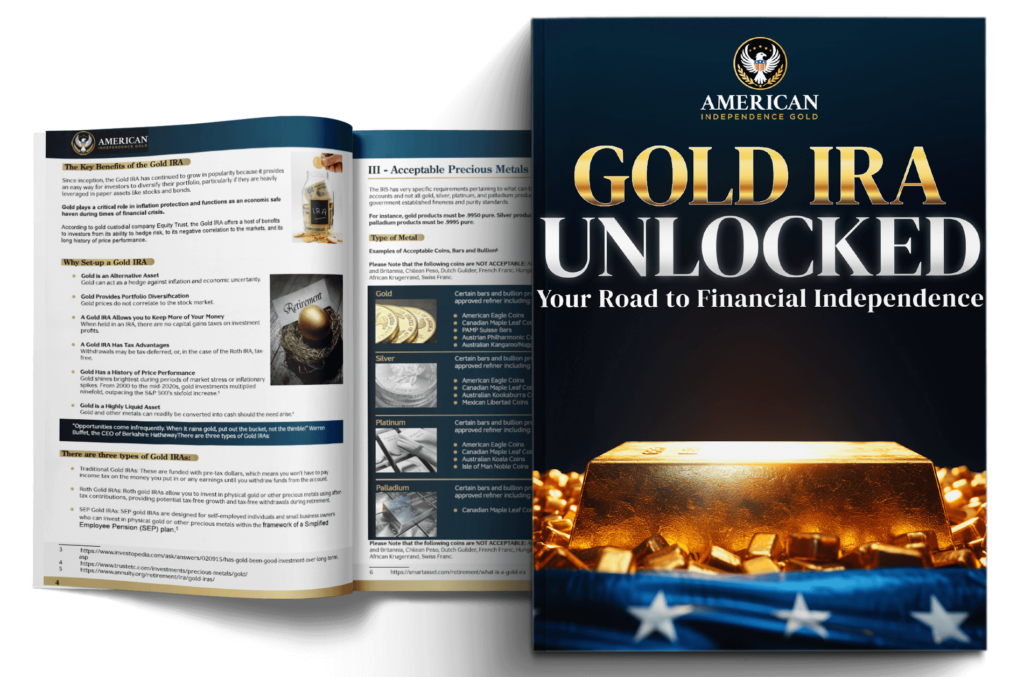
If you have a retirement account, whether it’s a 401(k), a traditional IRA, or a Roth IRA, you have options for adding gold to your portfolio without starting from scratch. A Gold IRA lets you hold IRS-approved physical gold and other precious metals inside a tax-advantaged retirement account. It works similarly to a traditional IRA in terms of how contributions and withdrawals are taxed, but instead of holding stocks or mutual funds, you’re holding physical precious metals stored in an approved depository.
This isn’t a fringe strategy. Precious Metals IRAs have been a legal retirement savings option for decades, and interest in them tends to rise during exactly the kind of volatile, uncertain market environment we’re seeing right now. If you’re already thinking about diversifying your retirement savings, it’s worth understanding how this works. American Independence Gold can walk you through the process step by step.
Rolling Over an Existing Account Into Gold
One of the most common questions people have is whether they can move money they already have saved into a Gold IRA without paying penalties or taxes. The answer, in most cases, is yes. If you have an old 401(k) from a previous employer or an existing traditional IRA, you can typically do a 401k to Gold IRA rollover without triggering a taxable event. The key is doing it correctly, following IRS rules and working with a qualified custodian. That’s exactly the kind of guidance American Independence Gold provides to clients every day.
Frequently Asked Questions
Why does a Goldman Sachs oil forecast matter to regular investors?
Goldman Sachs is one of the most closely watched financial institutions in the world. When it reverses a major forecast, it signals that market conditions have shifted in a meaningful way. For regular investors, that matters because oil price spikes tend to drive broader inflation, which erodes the purchasing power of savings and retirement accounts. Understanding these signals helps you make more informed decisions about how your money is protected.
How does the Strait of Hormuz affect oil prices and inflation?
The Strait of Hormuz is the world’s most important oil chokepoint. Roughly 20 percent of global oil supply, estimated at close to 10 million barrels per day, passes through this narrow waterway. Any disruption to traffic there, whether from conflict, blockades, or political tension, can cause immediate oil price spikes. Higher oil prices feed directly into inflation, raising costs for transportation, manufacturing, and consumer goods across the economy.
Does gold actually go up when oil prices spike?
Historically, gold has tended to rise during periods of geopolitical stress that also drive oil prices higher. This is because both assets respond to the same underlying forces: inflation fears, currency instability, and loss of confidence in traditional financial systems. While past performance doesn’t guarantee future results, gold’s track record during major oil crises, including the 1970s embargo, the Gulf War, and the 2003 Iraq invasion, shows a consistent pattern of increased demand during energy market disruptions.
What is a Gold IRA and how is it different from a regular IRA?
A Gold IRA is a self-directed individual retirement account that holds IRS-approved physical precious metals, like gold coins and bars, instead of stocks or mutual funds. It offers the same tax advantages as a traditional or Roth IRA, but your savings are backed by physical gold stored in an approved depository. It’s a legal, established retirement savings option that many investors use to diversify away from paper assets during periods of economic uncertainty.
Can I move my existing 401(k) or IRA into gold without paying taxes or penalties?
In most cases, yes. If you have an existing 401(k) from a former employer or a traditional IRA, you can typically roll those funds into a Gold IRA without triggering taxes or early withdrawal penalties, as long as the rollover is done correctly following IRS guidelines. Working with a reputable company like American Independence Gold ensures the process is handled properly, protecting you from costly mistakes.
The Goldman Sachs forecast is a reminder that the global economy doesn’t move in a straight line. Oil supply risks, inflation pressure, and geopolitical uncertainty are real forces that can affect your savings in ways that aren’t always obvious until it’s too late to respond. A Gold IRA or broader Precious Metals IRA strategy won’t solve every problem, but it can give your retirement savings a layer of protection that paper assets simply can’t provide on their own. If you’d like to learn more about your options, contact us today or call American Independence Gold directly at (844) 714-4653. Our team is ready to answer your questions and help you figure out the right next step.