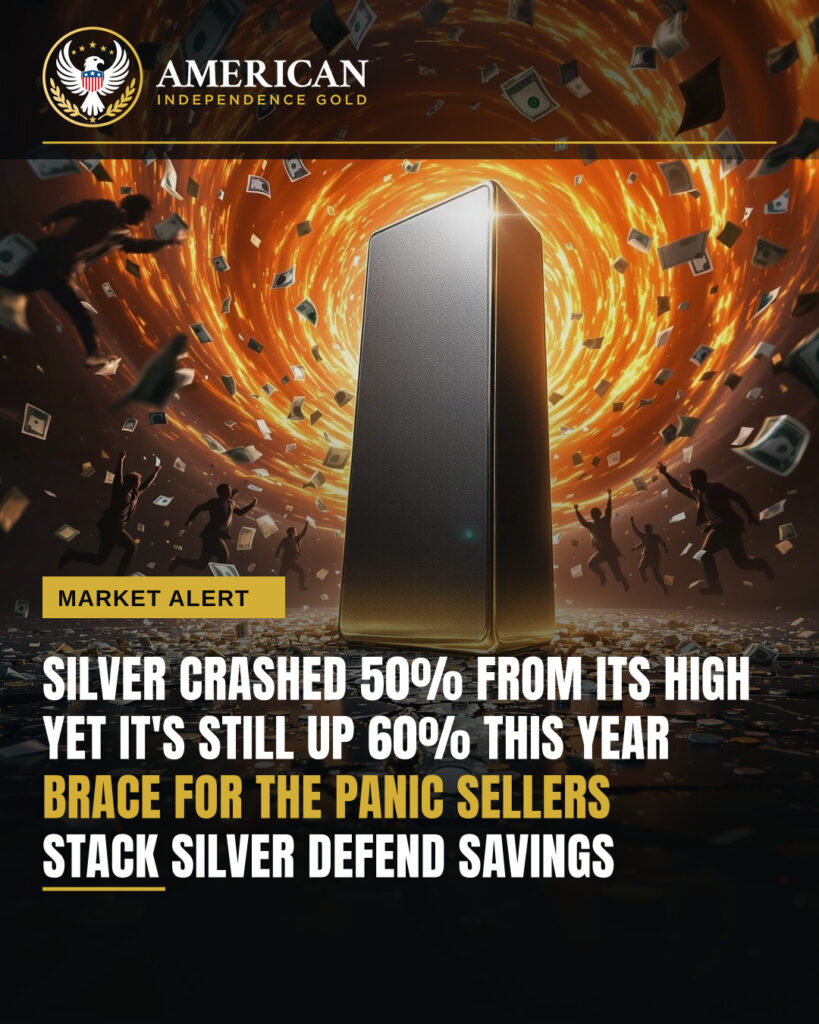
A year ago, silver was sitting at $38 an ounce. People were excited about it, buying as much as they could, and talking about it like it was the best thing in their portfolio. Fast forward to today, and silver is trading near $60. That is a 60% gain in twelve months. But here is the part that is getting all the attention right now: silver also dropped roughly 50% from its January peak before finding its footing again. And that swing is making some investors very nervous.
If you are one of those people feeling uneasy, that reaction is completely understandable. Watching any asset fall that sharply in a short period is unsettling. But before you make any quick decisions, it is worth stepping back and looking at the bigger picture. Because the story silver is telling right now is actually more interesting than the headlines suggest.
Why Silver’s Big Drop Does Not Tell the Whole Story
Here is something that gets lost when markets move fast: a 50% pullback from a peak sounds catastrophic, but it depends entirely on where that peak came from. Silver ran up hard and fast in January, which created an extreme high that was always going to be difficult to hold. When assets spike that sharply in a short time, some kind of correction is almost always part of the process. That does not mean the long-term trend is broken. It usually means the market is catching its breath.
Think about it this way. If silver was at $38 a year ago and it is at $60 today, that is still a 60% gain for anyone who bought at that earlier price. The people panicking right now are mostly focused on the January spike and the drop from it. But if you zoom out even a little, silver is still dramatically higher than it was not that long ago. The trend, when you look at it honestly, is still pointing up over the medium term.
Short-Term Volatility Is Normal in Precious Metals
Silver has always been more volatile than gold. That is just the nature of the metal. It has industrial uses, it is a smaller market, and it tends to move in bigger swings in both directions. That is part of why some investors love it and part of why others find it stressful. The key is understanding what you own and why you own it. If you bought silver because you believe in its long-term value as a store of wealth, a short-term correction should not change that thinking. You can check the current silver price anytime to keep an eye on where things stand, but try not to let daily moves dictate long-term decisions.
What Panic Selling Actually Costs You
This is the part that does not get talked about enough. When markets drop sharply, emotional selling is one of the most expensive mistakes an investor can make. You lock in a loss, you miss the recovery, and you usually end up buying back in later at a higher price. It is a pattern that plays out over and over, in every asset class, in every market cycle.
The investors who came out ahead in every major precious metals cycle over the past few decades were not the ones who timed the market perfectly. They were the ones who stayed patient, understood why they owned what they owned, and did not let a rough few weeks undo a solid long-term strategy. Silver at $60 with a 60% gain over the past year is still a very different story than silver at $38 with no gains at all. Context matters enormously here.
Emotions Are the Enemy of Good Investing
Highs trigger greed. Lows trigger fear. Both of those emotions can lead to poor decisions. When silver was spiking in January, plenty of people were buying at the top because it felt like the right move. Now that it has pulled back, some of those same people want to sell because it feels scary. This is exactly the cycle that hurts retail investors most. Building a strategy around long-term value, rather than short-term price action, is one of the most practical things you can do for your financial future.
How a Precious Metals IRA Helps You Stay the Course
One of the reasons so many people are exploring a Gold IRA as part of their retirement plan is that it changes the context of ownership. When your precious metals are held inside a tax-advantaged retirement account, you are not watching the price every day trying to figure out when to sell. You are building a long-term position that is meant to protect your purchasing power over years and decades, not weeks. That mental shift alone can make a significant difference in how you respond to volatility.
A Precious Metals IRA lets you hold IRS-approved gold and silver inside the same kind of account structure as a traditional IRA or 401k. The tax benefits are real, the asset protection is real, and the diversification away from paper assets is something a lot of people are finding increasingly important right now. If you have an existing retirement account, you may be able to transfer your IRA into gold or silver without triggering taxes or penalties. It is worth understanding how that process works before making any moves.
Silver Inside a Retirement Account Works Differently
When silver is part of a long-term retirement strategy rather than a short-term trade, the daily price swings feel very different. You are not trying to sell next week. You are protecting savings that need to hold value over the next ten, twenty, or thirty years. That longer time horizon changes everything about how you evaluate a 50% pullback from a peak. In that context, it is a buying opportunity for some people, not a reason to panic.
Frequently Asked Questions
Why did silver drop 50% from its January high if it is still up 60% for the year?
Silver had an unusually sharp spike in January that pushed prices to an extreme high very quickly. When assets move that fast, a pullback is common as the market rebalances. Despite that drop, silver is still significantly higher than it was twelve months ago, which means the longer-term trend remains positive for investors who bought before the January spike.
Should I sell my silver now that prices have pulled back sharply?
Selling during a sharp pullback locks in losses and often means missing the recovery. Historically, investors who sold precious metals during corrections and planned to buy back in later ended up paying more when they re-entered. If your original reason for owning silver was long-term value preservation, a short-term price swing is generally not a reason to exit your position.
What is a Gold IRA and can it include silver?
A Gold IRA is a self-directed individual retirement account that holds IRS-approved physical precious metals instead of stocks or bonds. Despite the name, many Gold IRAs also allow silver, platinum, and palladium. It offers the same tax advantages as a traditional IRA while giving you exposure to real, physical assets that are not tied to the performance of the stock market.
How does silver perform compared to gold during market downturns?
Silver tends to be more volatile than gold in both directions. It can fall faster during a downturn and rise faster during a recovery. Gold is generally considered the more stable store of value, while silver offers higher potential gains alongside higher risk. Many investors hold both as part of a diversified Precious Metals IRA to balance stability with growth potential.
What is the best way to start protecting my retirement savings with precious metals?
The most practical first step is understanding your options. If you have an existing IRA or 401k, you may be able to roll those funds into a Precious Metals IRA without taxes or penalties. Working with a specialist at American Independence Gold can help you figure out which account type fits your situation and what IRS-approved metals make sense for your goals.
Silver’s story right now is a good reminder of why long-term thinking matters more than short-term headlines. A 60% gain over twelve months is significant, and a pullback from a spike does not erase that. If you are thinking about how precious metals fit into your retirement plan, the team at American Independence Gold is ready to help. Contact us today or call us directly at (844) 714-4653 to speak with a specialist who can walk you through your options.